


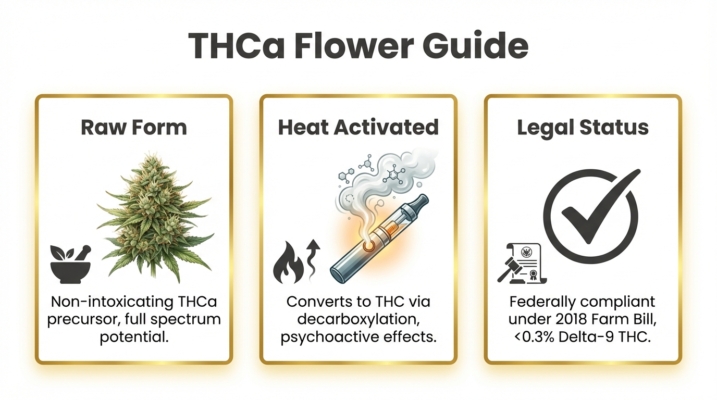
THCA

The Complete Guide to THCa Flower: Benefits, Where to Buy, and More
THCa flower is raw cannabis hemp that contains high concentrations of tetrahydrocannabinolic acid, a…
Learn more
You must be 21+ to enter this site
 FREE SHIPPING $89+
 FREE SODA ON $120+
 100% FEDERALLY LEGAL
 LAB TESTED FOR PURITY
FREE SHIPPING $89+
FREE SODA ON $120+
100% FEDERALLY LEGAL
LAB TESTED FOR PURITY
FREE SHIPPING $89+
FREE SODA ON $120+
100% FEDERALLY LEGAL
LAB TESTED FOR PURITY
FREE SHIPPING $89+
FREE SODA ON $120+
100% FEDERALLY LEGAL
LAB TESTED FOR PURITY
FREE SHIPPING $89+
FREE SODA ON $120+
100% FEDERALLY LEGAL
LAB TESTED FOR PURITY
FREE SHIPPING $89+
FREE SODA ON $120+
100% FEDERALLY LEGAL
LAB TESTED FOR PURITY
LAB TESTED FOR PURITY
FREE SHIPPING $89+
FREE SODA ON $120+
100% FEDERALLY LEGAL
LAB TESTED FOR PURITY
FREE SHIPPING $89+
FREE SODA ON $120+
100% FEDERALLY LEGAL
LAB TESTED FOR PURITY
FREE SHIPPING $89+
FREE SODA ON $120+
100% FEDERALLY LEGAL
LAB TESTED FOR PURITY
FREE SHIPPING $89+
FREE SODA ON $120+
100% FEDERALLY LEGAL
LAB TESTED FOR PURITY
FREE SHIPPING $89+
FREE SODA ON $120+
100% FEDERALLY LEGAL
LAB TESTED FOR PURITY

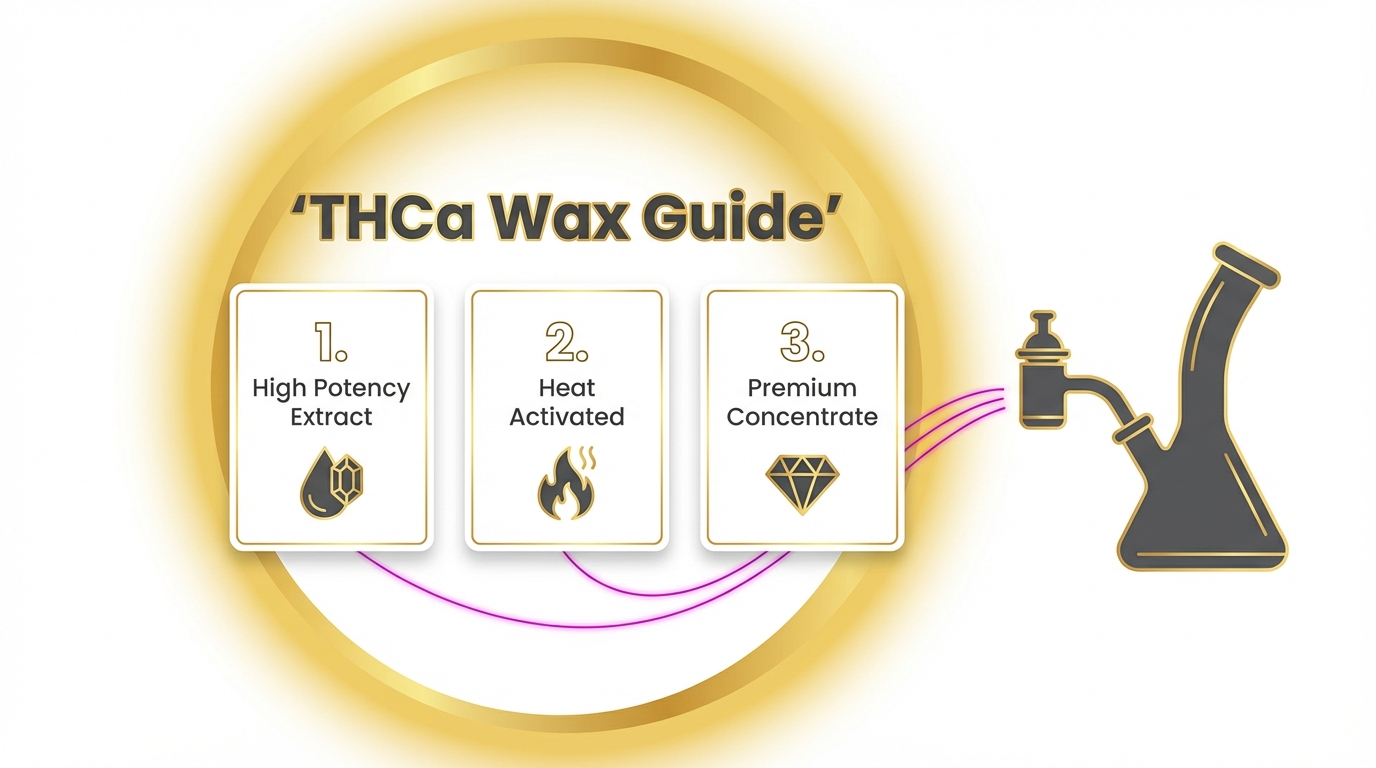
THCa wax is a cannabis concentrate containing high levels of tetrahydrocannabinolic acid in a soft, malleable form that converts to psychoactive THC when heated through dabbing.
This guide covers the fundamentals of THCa wax and concentrate types, dabbing equipment and technique, potency comparisons across product formats, effects and onset timing, legal status under federal hemp law, and quality verification through lab testing.
THCa wax differs from regular THC wax because it retains a carboxylic acid group (COOH) that makes it non-psychoactive until heat triggers decarboxylation. Seven distinct concentrate formats exist within the THCa category, including wax, shatter, crumble, budder, live resin, diamonds, and rosin, each with unique textures, extraction methods, and terpene profiles.
Dabbing requires specific equipment: a dab rig, nail or banger, torch, dab tool, and carb cap. Temperature control between 315°F and 450°F preserves terpenes and cannabinoids while delivering smooth vapor, making technique just as important as the concentrate itself.
Wax concentrates typically reach 60% to 90% potency, roughly three to four times stronger than premium flower. This concentration gap means dosing precision matters significantly, especially since inhaled THC peaks in the bloodstream within 6 to 10 minutes.
Hemp-derived THCa products containing under 0.3% delta-9 THC qualify as legal under the 2018 Farm Bill, though ongoing regulatory debate around total THC calculations creates state-level variation that consumers need to monitor.
IndaCloud specializes in federally compliant hemp-derived products that contain less than 0.3% delta-9 THC, with direct-to-consumer shipping available across the continental United States.
Third-party lab testing and a complete certificate of analysis remain the only reliable methods for verifying that a concentrate is free from pesticides, heavy metals, residual solvents, and microbial contamination before purchase.
IndaCloud provides comprehensive third-party lab testing for all hemp-derived products, making detailed certificates of analysis readily available to verify potency and purity before purchase.
THCa wax is a cannabis concentrate containing high levels of tetrahydrocannabinolic acid in a soft, malleable form. The sections below cover how it differs from THC wax, its physical characteristics, and the extraction methods used to produce it.
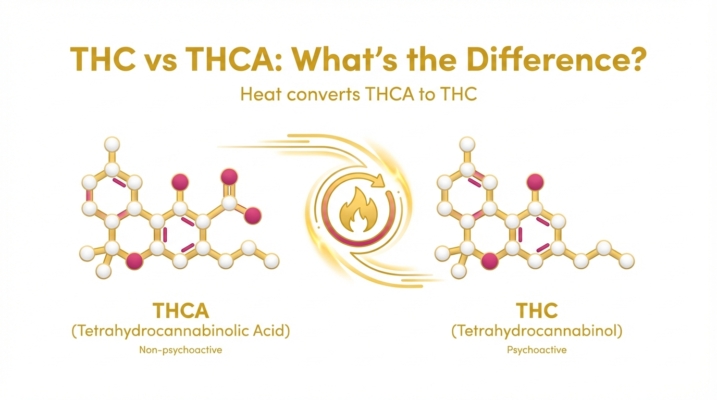
THCa wax is different from regular THC wax primarily in its chemical state before heat is applied. THCa contains a carboxylic acid group (COOH) attached to its molecular structure, whereas THC does not, according to the Cenikor Foundation. This extra acid group means THCa is non-psychoactive in its raw form. Regular THC wax has already undergone decarboxylation, so it contains activated delta-9 THC ready to produce intoxicating effects immediately.
Once a user applies heat to THCa wax through dabbing, that carboxylic acid group drops off, converting THCa into THC. The practical result is nearly identical once consumed, but the distinction matters for legal classification and product labeling.
THCa wax looks like a soft, opaque substance with a color range spanning pale gold to deep amber. Its texture is pliable and slightly sticky, similar to beeswax or ear wax, which makes it easy to portion with a dab tool.
Higher-quality wax typically appears lighter in color, suggesting cleaner extraction and fewer residual plant materials. When handled at room temperature, THCa wax holds its shape without crumbling. Dabbing it at 315°F to 450°F preserves terpenes like linalool and caryophyllene while fully vaporizing cannabinoids, according to E10 Labs. This lower temperature range delivers smoother, more flavorful hits that highlight the concentrate’s natural aroma profile.
THCa wax is made through solvent-based or solventless extraction methods that isolate cannabinoid-rich trichomes from cannabis plant material. The two most common solvent-based approaches are butane hash oil (BHO) extraction and supercritical CO2 extraction.
A 2021 study published in the MDPI Molecules Journal found that supercritical CO2 extraction produced a total cannabinoid yield close to 26%. After extraction, the resulting oil is purged of solvents and whipped during cooling, which creates the characteristic waxy consistency that separates this concentrate from shatter or crumble.
Understanding how THCa wax is produced helps contextualize the different concentrate types available on the market.
The main types of THCa concentrates are wax, shatter, crumble, budder, live resin, diamonds, and rosin. Each type differs in texture, extraction method, and terpene preservation.
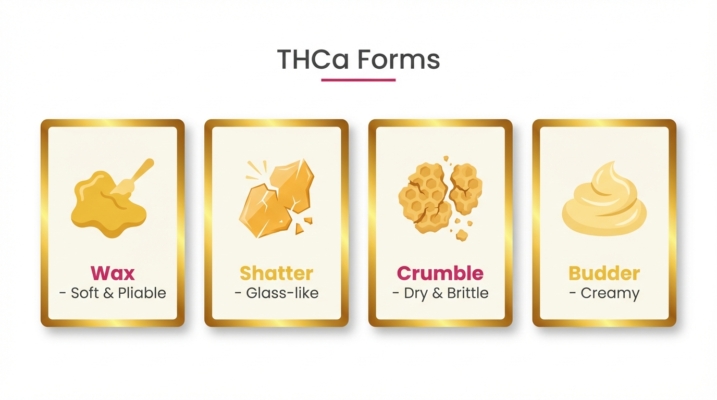
THCa wax is a soft, opaque concentrate with a sticky, malleable texture resembling candle wax. Producers create it through solvent-based extraction, typically using butane or CO2, followed by whipping during the purging stage. This agitation introduces air into the extract, giving wax its characteristic pliable consistency. Wax is popular for dabbing because it is easy to handle with a dab tool and melts evenly on a heated surface. Its slightly rough texture holds terpenes well, delivering rich flavor profiles alongside high cannabinoid content.
THCa shatter is a translucent, glass-like concentrate that snaps cleanly when broken. Unlike wax, shatter is left undisturbed during purging, allowing the molecules to settle into a smooth, stable sheet. This lack of agitation produces its signature brittle clarity. Shatter tends to have fewer residual solvents than less-purified concentrates because its molecular alignment allows impurities to be removed more thoroughly during processing. Though harder to portion precisely due to its rigid structure, many users prefer shatter for its clean appearance and consistent potency.
THCa crumble is a dry, crumbly concentrate that breaks apart easily between the fingers. Producers achieve this honeycomb-like texture by purging the extract at lower temperatures over a longer period. The extended, gentle purge removes moisture and solvents while creating a porous structure. Crumble works well for sprinkling over flower in a bowl or joint, making it one of the most versatile concentrate formats. Its dry consistency also makes it less messy to handle than stickier alternatives like budder or wax.
THCa budder is a creamy, butter-like concentrate produced by whipping the extract at higher temperatures during purging. This vigorous agitation at elevated heat creates a smooth, spreadable consistency that distinguishes budder from the coarser texture of wax. Budder retains a strong terpene profile because the whipping process incorporates volatile compounds back into the matrix rather than letting them escape. For dabbing, budder loads easily onto a tool and vaporizes evenly. Its rich flavor and smooth texture make it a favorite among concentrate enthusiasts who prioritize taste.
THCa live resin is a concentrate made from cannabis flower that was flash-frozen immediately after harvest rather than dried and cured. This freezing process preserves the plant’s full terpene and cannabinoid profile, producing an extract with exceptional flavor and aroma. According to The Bloom Brands, cannabis concentrates range from 65% all the way up to 95% THC, with live resin on the lower end and distillate on the higher end. That moderate potency range reflects live resin’s emphasis on the entourage effect, where terpenes and cannabinoids work together, rather than on raw THC concentration alone.
THCa diamonds are crystalline structures of nearly pure THCa, often found sitting in a pool of terpene-rich sauce. Producers form diamonds through a slow nucleation process where a supersaturated extract is left in controlled conditions, allowing THCa molecules to crystallize over days or weeks. The resulting crystals can reach some of the highest cannabinoid concentrations available in any concentrate format. When paired with their accompanying terp sauce, diamonds deliver both extreme potency and robust flavor. They are typically consumed by dabbing at low temperatures to preserve the delicate terpene layer.
THCa rosin is a solventless concentrate produced by applying heat and pressure to cannabis flower or hash. Because rosin requires no chemical solvents like butane or CO2, many users consider it the cleanest extraction method available. The process squeezes cannabinoids and terpenes directly from plant material using a heated press, yielding a golden, sap-like product. Rosin’s solventless nature appeals to health-conscious consumers who want to avoid residual solvent concerns entirely. For those prioritizing purity alongside potency, rosin represents one of the most straightforward paths from plant to concentrate.
Understanding these concentrate types helps you select the right format when it comes time to actually dab.
Dabbing THCa concentrates means vaporizing a small amount of concentrated THCa on a heated surface and inhaling the vapor. The sections below cover essential equipment, the step-by-step process, and optimal temperature settings.
The equipment you need to dab THCa includes a dab rig, a nail or banger, a torch, a dab tool, and a carb cap. Each component serves a specific function in the vaporization process.
Electronic nails (e-nails) offer an alternative to torches by providing precise, adjustable temperature control without an open flame.
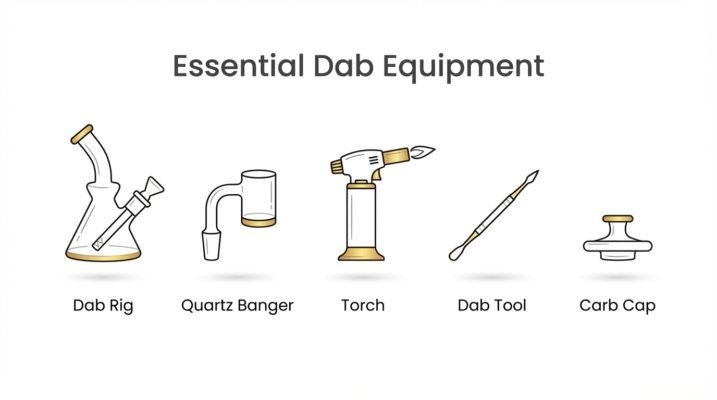
You take a dab by heating the nail, letting it cool briefly, applying a small amount of concentrate, capping it, and inhaling. The process requires careful timing for both safety and vapor quality.
Starting with the smallest possible amount is the safest approach, particularly for anyone new to concentrates.
The temperature you should dab THCa wax at ranges from 315°F to 450°F for low-temperature dabs, which preserve flavor and smoothness. According to E10 Labs, low-temperature dabbing in this range fully vaporizes cannabinoids like THC and CBD while preserving terpenes such as linalool and caryophyllene.
For most users, especially beginners, the low-to-medium range delivers the best combination of potency and taste. For those new to concentrates, IndaCloud offers a range of hemp-derived options organized by potency level and desired effect, helping beginners find appropriate starting points backed by lab-verified cannabinoid profiles. Consistently dabbing above 600°F degrades beneficial compounds and creates a harsher experience that diminishes concentrate quality.
With dabbing fundamentals covered, understanding potency differences helps you choose the right product for your tolerance level.
THCa wax is significantly more potent than most other cannabis products, with concentrations typically ranging from 60% to 90%. The sections below compare THCa wax potency against flower, vapes, and edibles.
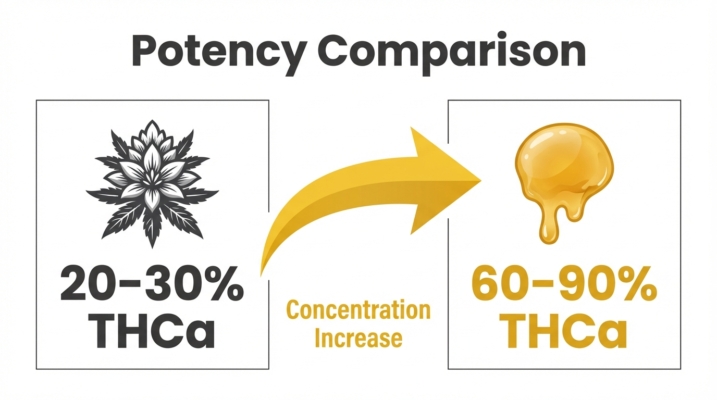
THCa wax potency compared to THCa flower is dramatically higher. While premium THCa flower typically contains 20% to 30% total cannabinoids, wax concentrates reach 60% to 90%, making them roughly three to four times stronger by weight.
This gap exists because wax is a refined extract. During production, trichomes are separated from plant material through solvent-based or mechanical processes, concentrating the THCa into a dense, purified form. Flower retains its full plant matrix of cellulose, chlorophyll, and moisture, which dilutes the overall cannabinoid percentage.
Both products contain THCa with the chemical formula C22H30O4, as documented by PubChem. The THCa molecule carries a carboxylic acid group (COOH) that converts to THC upon heating, so the same decarboxylation process applies regardless of format. For anyone accustomed to flower, transitioning to wax requires significantly smaller doses to achieve comparable effects.
 7
7
THCa wax potency compared to THCa vapes is generally similar in cannabinoid concentration, though delivery and experience differ. Both formats typically fall within the 60% to 90% THCa range, since vape cartridges are filled with concentrated cannabis oil extracted through comparable methods.
The key distinction lies in how each product is consumed. Wax requires a dab rig or specialized device where the user controls the exact temperature, allowing fine-tuned vaporization of cannabinoids and terpenes. Vape cartridges use preset heating elements that offer less temperature customization. This means wax can deliver slightly more efficient cannabinoid activation when dabbed at optimal temperatures, while vapes prioritize portability and consistency. For users seeking maximum control over their concentrate experience, wax offers a slight edge in customization despite near-identical potency on paper.
THCa wax potency compared to edibles differs not just in concentration but in how the body processes each product. Wax delivers 60% to 90% THCa that converts to THC almost instantly through heat, producing effects within minutes. Edibles, by contrast, typically contain 5mg to 100mg of THC per serving and must pass through the digestive system before reaching the bloodstream.
When the liver metabolizes ingested THC, it converts delta-9 THC into 11-hydroxy-THC, a metabolite that crosses the blood-brain barrier more efficiently. This is why edibles often feel subjectively stronger and longer-lasting despite containing far less total THC than a single dab of wax. Onset with edibles can take 30 minutes to two hours, whereas inhaled concentrates peak rapidly. Comparing the two purely by cannabinoid percentage is misleading; bioavailability and metabolic pathway matter just as much as raw potency numbers.
Understanding these potency differences helps determine proper dosing across each format.
The effects you should expect from dabbing THCa wax include rapid-onset psychoactive effects comparable to traditional cannabis concentrates, since heat converts THCa into active THC. The subsections below cover the decarboxylation process, onset timing, and duration of effects.
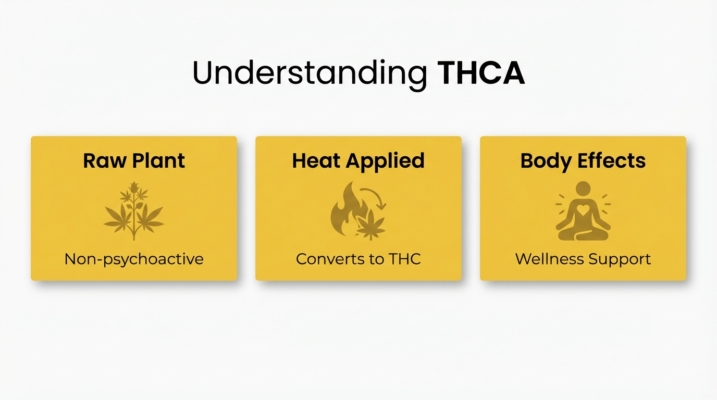
THCa converts into THC when you heat it through a chemical process called decarboxylation. THCa contains a carboxylic acid group (COOH) attached to its molecular structure, and heat strips this group away, releasing carbon dioxide and transforming the non-psychoactive acid into psychoactive delta-9 THC. According to a 2017 study published in PubMed Central, the activation energy for THCA-A decarboxylation was measured at 88 kJ/mol, confirming that sufficient heat energy is essential for complete conversion.
When dabbing, the high temperatures of a heated nail or banger trigger this reaction almost instantaneously. This immediate conversion is why dabbing THCa wax produces strong psychoactive effects, even though the concentrate tests as non-psychoactive before heating.
The effects of dabbing THCa kick in within seconds to minutes after inhalation. Because the vapor enters the lungs and passes directly into the bloodstream, cannabinoid delivery is nearly immediate. According to a study published in PubMed Central, THC and its metabolites enter the bloodstream quickly through the lungs, with peak plasma concentration achieved within 6 to 10 minutes after inhalation.
This rapid onset distinguishes dabbing from slower delivery methods like edibles, which must pass through the digestive system first. For most users, the initial wave of effects becomes noticeable almost immediately, then intensifies over the following several minutes before reaching full strength.
The effects of a THCa dab last approximately one to three hours for most users, though individual factors can shift this range. Variables that influence duration include:
Compared to smoking flower, where effects typically fade within one to two hours, concentrates often sustain their peak longer due to the higher volume of THC absorbed per inhalation. Beginners should start small and wait at least 15 minutes before considering a second dab. Understanding onset and duration helps set realistic expectations before exploring legal considerations.
THCa wax occupies a complex legal space in the United States. Federal law and state regulations create different rules depending on the source of the concentrate and its delta-9 THC content. The following subsections explain how the 2018 Farm Bill applies and why the distinction between hemp and marijuana matters.
The 2018 Farm Bill applies to THCa concentrates by defining legal hemp as any cannabis plant derivative containing no more than 0.3% delta-9 THC on a dry-weight basis. THCa concentrates derived from compliant hemp can qualify as legal under this federal threshold because THCa itself is not delta-9 THC.
However, a significant gray area exists. According to the Congressional Research Service, the cannabis industry began producing products that contain less than 0.3% delta-9 THC but a total THC concentration exceeding 0.3%, creating uncertainty regarding which products are legally considered hemp. Since THCa converts to THC when heated, regulators continue debating whether total THC or delta-9 THC alone should determine legality. Consumers should verify both federal compliance and their specific state laws before purchasing any THCa concentrate.
The difference between hemp-derived and marijuana-derived THCa comes down to the plant’s delta-9 THC content at harvest. Hemp-derived THCa originates from cannabis plants containing 0.3% or less delta-9 THC, making the source plant federally legal. Marijuana-derived THCa comes from plants exceeding that threshold, classifying them as controlled substances under federal law.
Chemically, the THCa molecule is identical regardless of its source. Both forms convert to delta-9 THC through decarboxylation when exposed to heat. The legal distinction rests entirely on the originating plant’s compliance with the 0.3% delta-9 limit, not on the cannabinoid profile of the final concentrate. This is why sourcing transparency and third-party lab testing are essential for any THCa wax product sold as hemp-derived.
Understanding these legal boundaries helps consumers make informed purchasing decisions and navigate an evolving regulatory landscape.
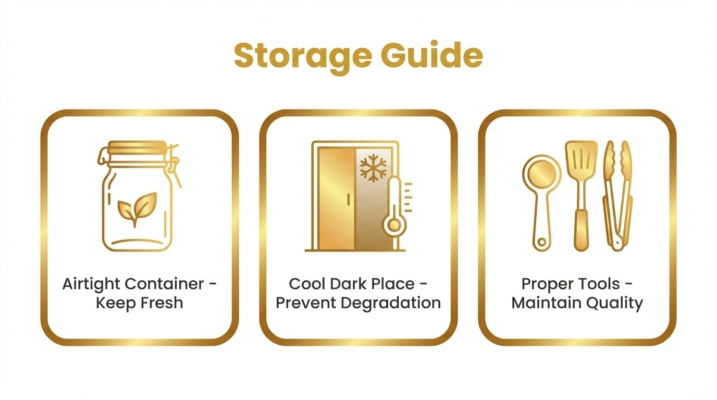
You store THCa wax to preserve quality by controlling light exposure, temperature, humidity, and air contact. Proper storage prevents premature decarboxylation, terpene degradation, and texture breakdown. The following factors determine how long your concentrate maintains its potency and flavor:
According to a study published in the Journal of Pharmacy and Pharmacology, carefully prepared cannabis extracts are reasonably stable for one to two years when stored in the dark at room temperature. This timeline holds when airtight, light-proof conditions are consistently maintained.
For anyone building a collection of concentrates, labeling each container with the strain name, purchase date, and batch number helps track freshness. Concentrates stored poorly lose terpene complexity first, resulting in a harsher, less flavorful dab even before measurable potency drops. Investing in proper storage is one of the simplest ways to protect both your experience and your investment.
Beginners should know that THCa dabs deliver significantly stronger effects than flower, making concentrate selection, dosing, and safety preparation essential first steps. The following sections cover choosing the right product, finding a safe starting dose, and protecting yourself during the process.
You choose the right THCa concentrate as a beginner by prioritizing textures that are easy to handle and potency levels that allow controlled dosing. Budder and crumble are forgiving options because their soft, malleable consistency makes it simple to scoop small, consistent portions. Shatter and diamonds, while potent, can be harder to dose precisely due to their rigid or crystalline form.
Start with concentrates on the lower end of the potency spectrum. Since cannabis concentrates can range from 65% to 95% THC after decarboxylation, selecting a product closer to that 65% threshold gives more room for error. Always confirm that the product includes a current certificate of analysis from a third-party lab before purchasing.
The amount of THCa wax you should dab for your first time is a single dose roughly the size of a grain of rice. According to Elevate Care NP’s medical cannabis dosing guidelines, the safest starting dose for beginners is 2.5 mg to 5 mg of THC. Because concentrates are far more potent than flower, even a tiny piece can deliver that threshold quickly once heated.
Wait at least 15 to 20 minutes before considering a second dab. Effects from inhalation peak rapidly, so patience prevents accidental overconsumption. Increasing the dose gradually across multiple sessions, rather than within a single session, is a far safer approach to finding your comfort level.
The safety precautions you should take when dabbing include proper equipment handling, environmental awareness, and knowing your limits. Key precautions are:
Overconsumption can cause intense discomfort. If effects feel overwhelming, stay calm, hydrate, and rest in a safe space. Understanding your personal response at low doses before scaling up is the most reliable way to keep the experience positive.
You know if your THCa wax is high quality by verifying third-party lab testing results and reviewing the certificate of analysis. These two steps confirm potency, purity, and safety before you dab.
Third-party lab testing matters for concentrates because independent laboratories verify that products are free from harmful contaminants and accurately labeled for potency. Without this testing, consumers have no reliable way to confirm what they are actually inhaling.
Cannabis contaminants pose serious health risks. According to a 2018 study published in the National Institutes of Health, common cannabis contaminants include microbes, heavy metals, and pesticides, with direct human toxicity risks including infection, carcinogenicity, and reproductive impacts. Concentrates can amplify these dangers because extraction processes may concentrate contaminants alongside cannabinoids.
Independent testing removes the conflict of interest that exists when manufacturers test their own products. Labs that hold no financial stake in results provide an objective assessment of:
For any concentrate claiming 60% to 90% potency, third-party verification is the only way to trust the number on the label.
You should look for several key data points on a certificate of analysis (COA) to confirm concentrate quality and safety.
A legitimate COA includes:
Environmental contaminants that require specific testing in cannabis preparations include aflatoxins, foreign matter, heavy metals, ochratoxin A, pesticides, and total ash, as documented by NIH research. If any of these categories are missing from a COA, treat that as a red flag. A complete, verifiable COA is the clearest indicator of a trustworthy concentrate product.
With quality benchmarks established, knowing where to source tested concentrates becomes the next step.
Premium THCa concentrates are available online from hemp-derived retailers that prioritize third-party lab testing, transparent sourcing, and federally compliant formulations. The sections below cover how Inda Cloud delivers a concentrate-level experience and the essential takeaways from this guide.
Yes, Inda Cloud’s hemp-derived products can deliver a concentrate-level experience. All Inda Cloud products are 100% federally legal, containing less than 0.3% delta-9 THC, and every batch undergoes rigorous third-party testing for potency and purity. Wax concentrates can reach anywhere between 60–90% THC according to Livwell Cannabis Dispensary, placing properly formulated hemp-derived options in the same potency range as traditional dispensary products.
Many hemp-derived retailers offer direct shipping with discreet packaging and expedited order processing. Established hemp-derived retailers with substantial customer bases and experienced teams can provide the accessibility and quality standards serious concentrate users expect.
The key takeaways about THCa wax and dabs center on potency, technique, quality verification, and legal awareness:
For those ready to explore concentrates with confidence, Inda Cloud offers lab-tested, federally compliant hemp-derived products delivered directly to your door.
THCa flower is raw cannabis hemp that contains high concentrations of tetrahydrocannabinolic acid, a…
Learn more
THCA is a non-psychoactive cannabinoid acid found in raw cannabis that converts to psychoactive…
Learn more

Delta-8 THC wax is a concentrated cannabis extract containing high levels of delta-8-tetrahydrocannabinol in…
Learn more
THC and THCA percentages are laboratory measurements that indicate the psychoactive potency and raw…
Learn more


