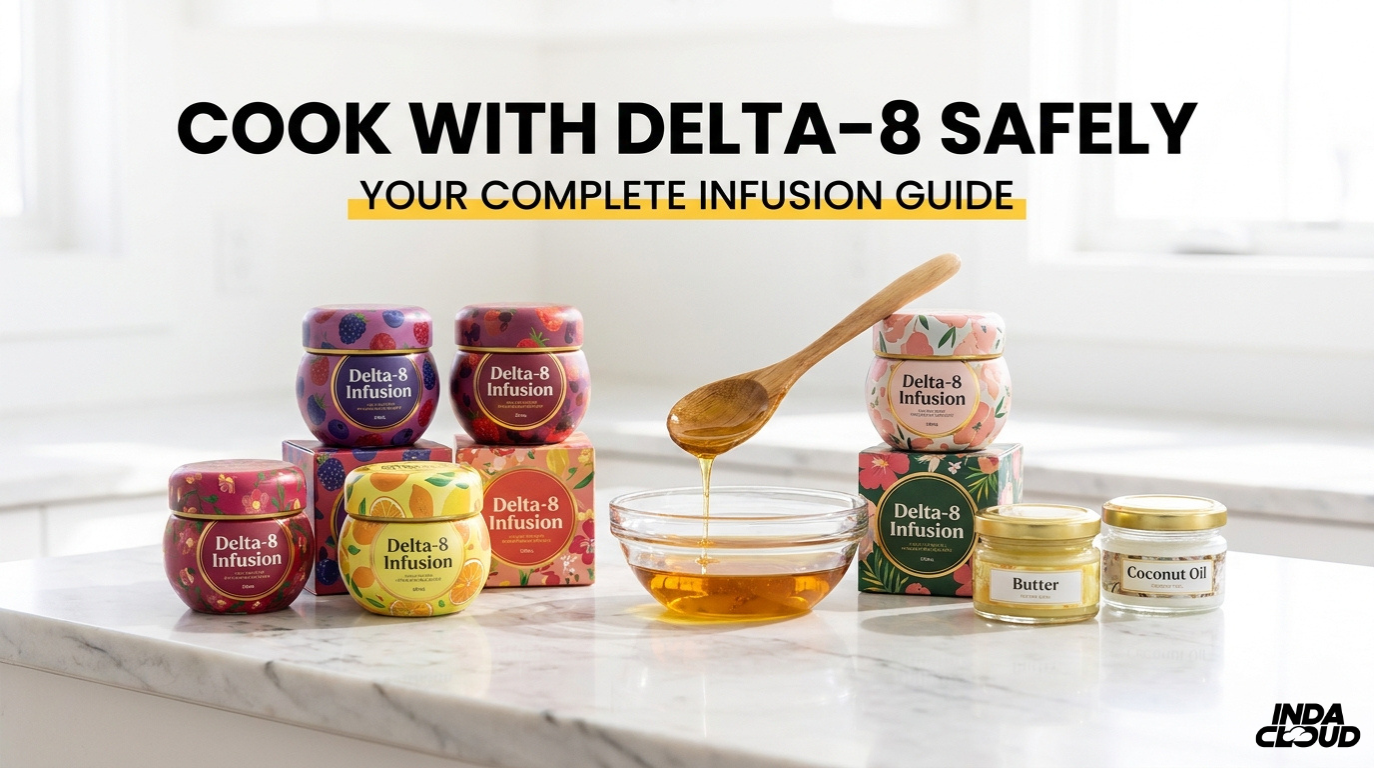
Cooking with Delta-8 THC is the process of infusing this milder hemp-derived cannabinoid into fats, batters, and beverages to create edibles with controlled psychoactive effects. Delta-8 THC is a positional isomer of Delta-9 THC with roughly 50–75% of its potency, making it a more forgiving option for home cooks exploring cannabinoid-infused recipes.
This guide covers Delta-8’s identity and legal status, product selection and decarboxylation, fat infusion techniques and recipes, dosage calculation and temperature control, and safety practices including storage and comparisons to Delta-9 edibles.
Delta-8 occupies a complex legal space in the United States. Federal hemp law permits its sale when derived from compliant hemp, but multiple states have banned or restricted it outright, and DEA classification rules around synthetic derivation add further uncertainty. Verifying local regulations before purchasing or preparing any Delta-8 product is a necessary first step.
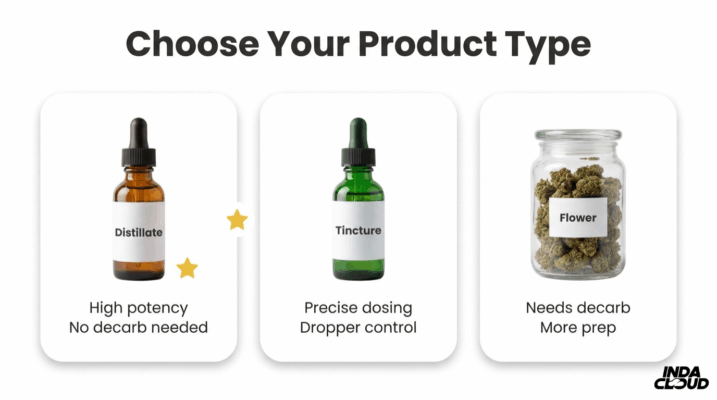
Choosing the right product format shapes every recipe that follows. Distillates offer high concentration and skip the decarboxylation step, tinctures provide precise dropper-based dosing, and raw flower requires heat activation before infusing into fats. Saturated fats like butter, coconut oil, and bacon fat bind cannabinoids far more efficiently than lighter oils, directly affecting how much Delta-8 each serving retains.
Accurate dosing and temperature discipline separate a reliable edible from an unpredictable one. Beginners benefit from starting at 5 to 15 mg per serving, and keeping cooking temperatures below 180°C (356°F) prevents degradation into less active compounds. Thorough mixing during infusion eliminates potency hotspots across a batch.
Edible onset ranges from 30 minutes to 2 hours, with effects lasting 4 to 8 hours. Proper labeling, child-resistant storage, and patience during the onset window are essential safety practices that protect both the cook and anyone who encounters the finished product.
What Is Delta-8 THC and Why Is It Used in Cooking?
Delta-8 THC is a naturally occurring cannabinoid found in hemp that produces milder psychoactive effects than its more common counterpart, Delta-9 THC. Home cooks use it in edibles for its gentler experience and versatile fat-soluble properties. The following subsections cover its chemical identity, how it differs from Delta-9, and why edibles offer a unique consumption method.
What Is Delta-8 THC?
Delta-8 THC is a positional isomer of Delta-9 THC, with its double bond located between the C8 and C9 carbons rather than the C9 and C10 position. This small structural difference produces notably different effects. According to the Journal of Analytical Toxicology, Delta-8 THC activates both CB1 and CB2 cannabinoid receptors, but its psychoactive potency is approximately 50–75% that of Delta-9 THC. Because it binds to the same endocannabinoid receptors at lower intensity, Delta-8 delivers a calmer, more clear-headed experience that many users find easier to manage in everyday settings.
How Does Delta-8 Differ from Delta-9 THC?
Delta-8 differs from Delta-9 THC primarily in potency, onset profile, and legal classification. While both cannabinoids share nearly identical molecular formulas, that single bond-position shift reduces Delta-8’s intoxicating strength by roughly 25–50%. Users often report less anxiety and paranoia compared to Delta-9. From a regulatory standpoint, hemp-derived Delta-8 occupies a different legal space because the 2018 Farm Bill legalized hemp derivatives containing no more than 0.3% Delta-9 THC on a dry-weight basis. For home cooks, this distinction matters: Delta-8 is more widely accessible in many states, though restrictions vary.
Why Are Edibles a Popular Way to Consume Delta-8?
Edibles are a popular way to consume Delta-8 because they offer precise dosing, longer-lasting effects, and a smoke-free experience. When Delta-8 is infused into fats like butter or coconut oil, the cannabinoid binds efficiently to lipids, making it easy to incorporate into virtually any recipe. Oral ingestion produces effects that typically last 4 to 8 hours, significantly longer than inhaled methods. This extended duration appeals to users seeking sustained, gradual relief. For anyone who prefers to avoid vaping or smoking, cooking with Delta-8 provides a discreet, customizable alternative that fits naturally into meals and treats.
With these fundamentals in place, understanding local legality is the next essential step.
Is Delta-8 THC Legal to Cook with in the United States?
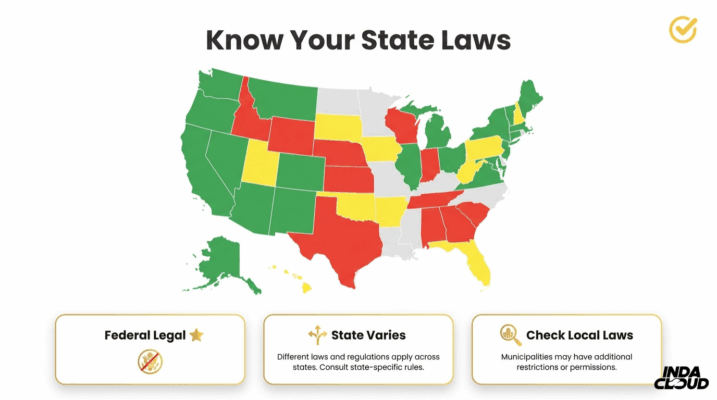
Delta-8 THC is legal to cook with in the United States at the federal level, but state laws vary significantly. Federal hemp legislation, DEA classification rules, and individual state bans all shape whether cooking with Delta-8 is permitted where you live.
The 2018 Farm Bill (Agriculture Improvement Act of 2018) legalized hemp and its derivatives containing no more than 0.3% Delta-9 THC on a dry-weight basis, creating a legal pathway for hemp-derived Delta-8 THC. This means Delta-8 distillates, tinctures, and other hemp-derived products used in cooking fall within federal legality when sourced from compliant hemp.
However, the legal landscape is far from uniform. On August 21, 2020, the DEA issued an interim final rule clarifying that all synthetically derived tetrahydrocannabinols remain Schedule I controlled substances. Because most commercial Delta-8 THC is converted from CBD through chemical processes, this ruling creates ambiguity around whether specific Delta-8 products qualify as “synthetically derived.”
State-level restrictions add another layer of complexity. According to research from the Baker Institute for Public Policy, as of late 2024, several U.S. states have moved to ban or strictly regulate Delta-8 THC. Prohibited states include:
- Alaska
- Colorado
- Delaware
- Idaho
- Iowa
- Montana
- New York
- North Dakota
- Rhode Island
- Vermont
Additional states impose age restrictions, labeling requirements, or potency caps that directly affect homemade edible preparation and distribution. Before cooking with any Delta-8 product, verifying your state’s current regulations is essential, since legislation in this space changes frequently.
For anyone sourcing Delta-8 for culinary use, choosing products derived from Farm Bill-compliant hemp with verified third-party lab testing is the safest approach to staying within legal boundaries. Understanding the specific type of Delta-8 product you plan to cook with helps determine which cooking methods best preserve its potency.
What Types of Delta-8 Products Work Best for Cooking?
The types of Delta-8 products that work best for cooking are distillates, tinctures, and flower. Each form offers distinct advantages depending on the recipe, desired potency, and preparation method.

How Well Does Delta-8 Distillate Work in Recipes?
Delta-8 distillate works exceptionally well in recipes due to its high concentration and versatility. This thick, honey-like extract blends directly into fats, batters, and sauces without adding significant flavor or volume. Because distillate is already decarboxylated, it requires no heat activation before use.
Purity varies between products, however. A non-targeted UV spectroscopy analysis published by LCMS.cz found that Delta-8 THC distillates showed purity levels ranging from 79.0% to 93.6%, often containing unidentified peaks and residual reagents from synthetic CBD conversion. Choosing lab-tested distillate from a reputable source is essential for safe, predictable results in the kitchen.
Can You Cook with Delta-8 Tinctures?
Yes, you can cook with Delta-8 tinctures, though they require more careful handling than distillates. Tinctures typically consist of Delta-8 extract suspended in a carrier oil or alcohol base, making them easy to measure with a dropper for precise dosing.
Alcohol-based tinctures can evaporate when exposed to heat, so they work best in no-bake recipes, dressings, or dishes added at the end of cooking. Oil-based tinctures integrate more reliably into warm preparations. Regardless of the format, accurate dosing matters. According to the U.S. FDA, 104 adverse events related to Delta-8 THC were reported between December 2020 and July 2021, with symptoms including vomiting, anxiety, dizziness, and confusion. Starting with low, carefully measured amounts reduces risk considerably.
Should You Use Delta-8 Flower for Infusions?
Delta-8 flower can be used for infusions, but it demands more preparation than distillate or tinctures. The flower must be decarboxylated before infusing into butter or oil, adding an extra step to the process. It also introduces plant material flavors that may alter a recipe’s taste profile.
Bioavailability differs meaningfully by form. Oral ingestion through edibles typically yields 6 to 10% bioavailability, while smoking or vaping flower ranges from 15 to 30%, according to Oregon Hemp Flower’s potency guide. This lower oral bioavailability means flower-based infusions may require higher starting amounts to achieve the same effect as distillate-based preparations. For most home cooks, distillate offers a simpler, more consistent starting point for edible recipes.
Why Do You Need to Decarboxylate Delta-8 Before Cooking?
You need to decarboxylate Delta-8 before cooking because raw cannabinoid flowers contain inactive acid-form compounds that must be heat-activated to produce psychoactive effects. The subsections below cover optimal temperature settings and what happens when this step is skipped.
What Temperature and Time Are Needed to Decarb Delta-8?
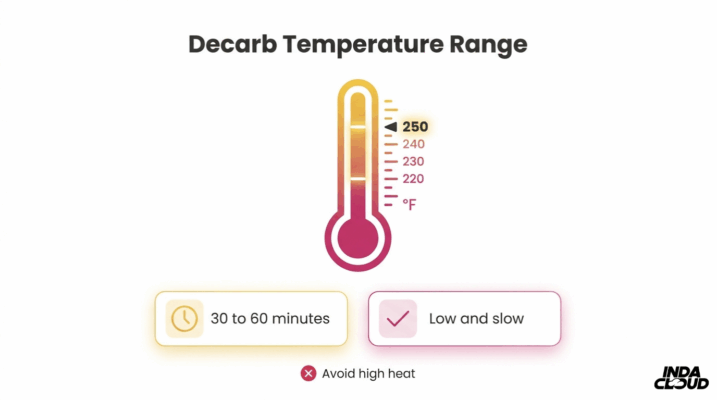
The temperature and time needed to decarb Delta-8 are approximately 220°F to 250°F (104°C to 121°C) for 30 to 60 minutes when working with Delta-8 flower. Precision matters here; too little heat leaves cannabinoids partially inactive, while excessive heat destroys them. According to a study published by the American Chemical Society, decarboxylation of THCA to THC completes at 160°C (320°F), but temperatures above this threshold should be avoided to prevent oxidation products like cannabinol (CBN) from forming. CBN produces sedative rather than psychoactive effects, fundamentally changing the edible’s outcome. Spreading flower evenly on a parchment-lined baking sheet and monitoring oven temperature with a separate thermometer helps maintain consistency. For Delta-8 distillate, decarboxylation is typically already complete during manufacturing, so this step applies primarily to raw flower infusions.
What Happens If You Skip Decarboxylation?
If you skip decarboxylation, the Delta-8 flower retains its acid-form cannabinoids, which do not bind efficiently to CB1 receptors in the brain. The result is an edible with little to no psychoactive effect, regardless of how much flower you used. Essentially, the cannabinoids pass through digestion without activating the endocannabinoid system in any meaningful way. Beyond wasted potency, skipping this step also affects flavor; raw flower infused directly into butter or oil tends to produce a harsher, more vegetal taste. For anyone investing time and ingredients into homemade edibles, the 30 to 60 minutes required for proper decarboxylation is the single most important preparatory step. This is a mistake that no amount of careful dosing or quality ingredients can correct after the fact.
With decarboxylation complete, the next step is binding activated Delta-8 into a fat-based carrier.
How Do You Make Delta-8 Infused Butter or Oil at Home?
You make Delta-8 infused butter or oil at home by slowly heating your decarboxylated Delta-8 concentrate with a fat source over low, consistent temperatures. The process varies slightly depending on whether you choose butter or coconut oil.
What Is the Step-by-Step Process for Delta-8 Butter?
The step-by-step process for Delta-8 butter involves melting, infusing, and straining over gentle heat. Follow these steps:
- Melt one cup of unsalted butter in a saucepan over low heat, keeping the temperature between 150°F and 200°F.
- Add your measured dose of decarboxylated Delta-8 distillate to the melted butter.
- Stir the mixture continuously for 30 to 45 minutes, maintaining low heat throughout.
- Remove from heat and strain through cheesecloth into a glass container to remove any residual plant material.
- Refrigerate until the butter solidifies, then store in an airtight container.
Patience during the infusion window matters more than most home cooks realize; rushing with higher heat sacrifices potency for no meaningful time savings.
How Do You Infuse Coconut Oil with Delta-8?
You infuse coconut oil with Delta-8 by combining the two over low, sustained heat in a double boiler or slow cooker. Start by gently melting one cup of coconut oil, then stir in your pre-measured Delta-8 distillate. Maintain a temperature between 130°F and 160°F for approximately two hours, stirring every 15 to 20 minutes. Once the infusion period ends, strain and transfer the oil to a sealed glass jar. Coconut oil’s high saturated fat content makes it especially efficient at binding with cannabinoids, which is why it consistently outperforms lighter cooking oils for this purpose.
Which Fats Bind Most Effectively with Delta-8 THC?
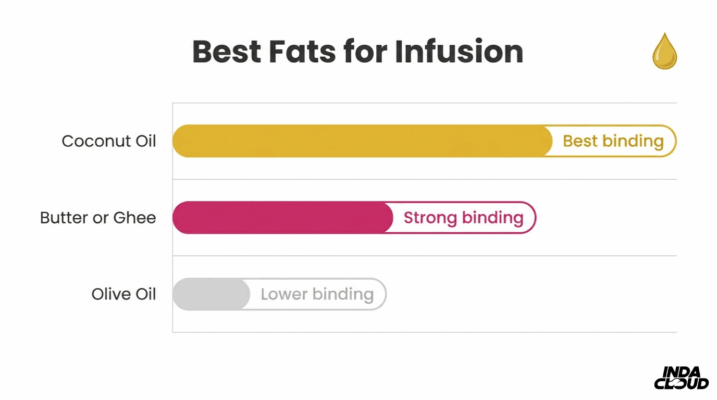
The fats that bind most effectively with Delta-8 THC are saturated fats. According to High Times, saturated fats such as butter, bacon fat, and coconut oil absorb THC better than monounsaturated fats like olive oil and avocado oil due to their superior lipid binding efficiency. This difference in absorption comes down to molecular structure; saturated fatty acid chains pack tightly, creating more binding sites for cannabinoid molecules.
For Delta-8 cooking, the most effective fat choices ranked by binding efficiency include:
- Coconut oil: highest saturated fat percentage among common cooking oils.
- Butter or ghee: strong binding capacity with versatile culinary applications.
- Bacon fat or lard: excellent absorption, ideal for savory recipes.
Olive oil and avocado oil still work in a pinch, but expect lower cannabinoid retention per serving. With your infused fat ready, the next step is choosing the right recipe to put it to use.
What Are the Best Recipes for Delta-8 THC Edibles?
The best recipes for Delta-8 THC edibles include gummies, brownies, infused beverages, and savory dishes. Each recipe requires specific techniques to preserve potency and ensure consistent dosing.
How Do You Make Delta-8 Gummies from Scratch?
You make Delta-8 gummies from scratch by combining a gelling agent, sweetener, flavoring, and Delta-8 distillate in a controlled heating process. The basic steps are:
- Heat fruit juice and sweetener in a saucepan over low heat.
- Stir in your gelling agent (pectin or gelatin) until fully dissolved.
- Remove from heat and let the mixture cool slightly before adding Delta-8 distillate.
- Pour into silicone gummy molds and refrigerate until set.
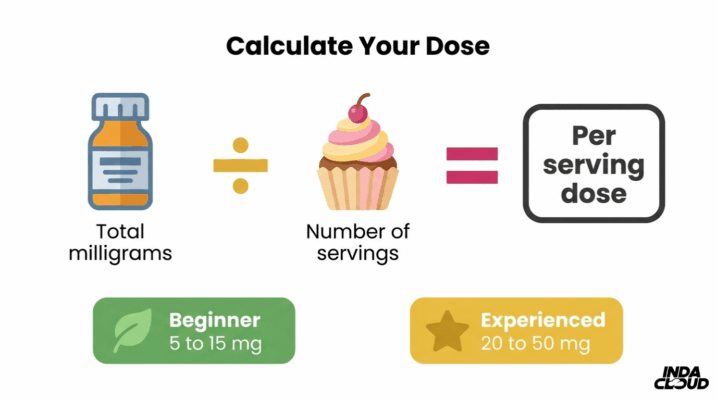
According to Perennia Food and Agriculture Inc., pectin is preferred for vegan-friendly Delta-8 gummies and offers higher heat resistance than gelatin, though gelatin provides the classic chewy texture consumers expect. Beginners should target 5 to 15 mg of Delta-8 per gummy, while experienced users may prefer 20 to 50 mg. Calculating total distillate and dividing evenly across molds is essential for consistent dosing.
How Do You Bake Delta-8 Brownies Without Losing Potency?
You bake Delta-8 brownies without losing potency by controlling oven temperature and mixing the distillate into fat before combining with batter. According to Philosopher Seeds, baking temperatures between 175°C and 180°C (347°F to 356°F) are sufficient to bake brownies without significantly degrading cannabinoids.
Key steps to protect potency:
- Blend Delta-8 distillate thoroughly into melted butter or oil before adding other ingredients.
- Keep oven temperature at or below 180°C (356°F).
- Avoid overbaking; remove brownies when a toothpick comes out slightly moist.
Adding the distillate to fat first ensures even distribution throughout the batter, which prevents hot spots that concentrate or destroy cannabinoids in certain portions.
How Do You Prepare Delta-8 Infused Drinks?
You prepare Delta-8 infused drinks by dissolving Delta-8 distillate into a fat-soluble carrier before mixing it into your beverage. Delta-8 THC is not water-soluble, so stirring distillate directly into juice or tea produces uneven dosing and an oily texture.
The most effective approach:
- Warm a small amount of MCT oil or coconut oil and blend in the desired dose of Delta-8 distillate.
- Add the infused oil to smoothies, hot chocolate, or warm tea where the fat integrates naturally.
- Stir thoroughly or use a blender to distribute the infused oil evenly.
Warm beverages work better than cold ones because heat keeps the oil emulsified. For cold drinks, blending at high speed helps maintain a more uniform mixture throughout the glass.
Can You Add Delta-8 to Savory Dishes?
Yes, you can add Delta-8 to savory dishes by incorporating it into fats like butter, olive oil, or sauces during preparation. Savory recipes that use a fat base, such as pasta sauces, salad dressings, and stir-fries, absorb Delta-8 distillate effectively.
Practical tips for savory cooking:
- Mix Delta-8 into warm butter or oil before drizzling over finished dishes.
- Avoid adding distillate to high-heat cooking stages like searing or frying at temperatures above 180°C.
- Stir the infused fat in at the end of cooking to minimize heat exposure.
Savory edibles are often underestimated, but they offer a practical advantage: the fat content in dishes like garlic butter pasta or cream-based soups naturally supports cannabinoid absorption. With consistent dosing per serving, these recipes fit into everyday meals rather than feeling like a separate indulgence.
How Do You Calculate the Right Delta-8 Dosage Per Serving?
You calculate the right Delta-8 dosage per serving by dividing the total milligrams of Delta-8 in your recipe by the number of servings. Beginner tolerance, experienced user needs, and even distribution each affect accuracy.
What Dosage Is Appropriate for Beginners?
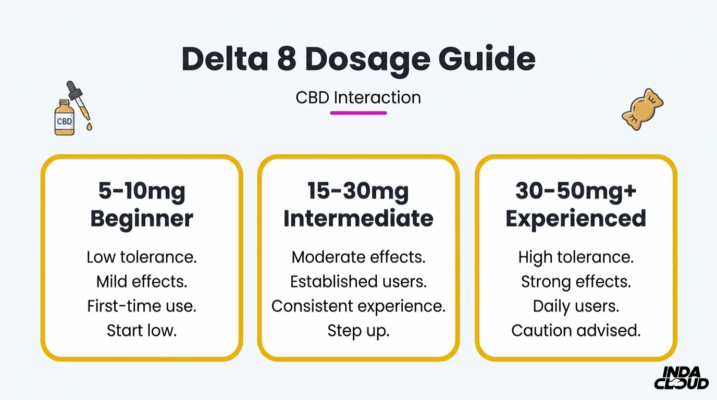
The appropriate dosage for beginners is 5 to 15 mg of Delta-8 THC per serving. Starting at the lower end, around 5 mg, allows new users to gauge individual sensitivity before increasing. According to the Journal of Cannabis Research, beginner dosage recommendations for Delta-8 THC typically range from 5 to 15 mg, while experienced users may consume 20 to 50 mg or more. Because edible onset can take up to two hours, waiting the full window before consuming additional servings prevents accidental overconsumption. For anyone new to cannabinoid edibles, patience during that first experience is more important than hitting a target dose.
How Do You Adjust Dosing for Experienced Users?
You adjust dosing for experienced users by increasing the per-serving amount to 20 to 50 mg of Delta-8 THC, based on established tolerance. Users familiar with Delta-9 THC should note that Delta-8 produces approximately 50 to 75% of Delta-9’s psychoactive intensity, so direct milligram comparisons between the two are misleading. Gradual 5 mg increments between sessions offer better control than large jumps. Experienced users also benefit from keeping a dosing journal that tracks milligrams consumed, onset timing, and perceived effects. This approach builds a reliable personal baseline rather than relying on generalized recommendations.
How Do You Ensure Even Distribution Across Servings?
You ensure even distribution across servings by thoroughly mixing the Delta-8 infusion into your base ingredient before portioning. Cannabinoids concentrate in fat, so incomplete stirring creates hotspots where one serving contains significantly more Delta-8 than another. Practical steps for consistent distribution include:
- Warm your infused butter or oil slightly to reduce viscosity before combining with batter.
- Stir continuously for at least two to three minutes after adding the infusion.
- Use uniform molds or measured scoops to portion each serving equally.
- For liquid recipes, blend with an immersion blender to emulsify the fat evenly.
Consistent portioning is the single most controllable variable in homemade edible safety, and skipping this step is where most dosing errors originate.
With accurate dosing established, maintaining proper cooking temperatures protects the potency you measured so carefully.
What Temperature Limits Should You Follow When Cooking?
The temperature limits you should follow when cooking with Delta-8 THC center on staying below degradation thresholds while still achieving proper cooking results. The sections below cover Delta-8’s degradation point, potency protection strategies, and the best cooking methods.
At What Temperature Does Delta-8 THC Degrade?
Delta-8 THC degrades when exposed to temperatures above approximately 175°C (347°F). At this threshold, the cannabinoid begins breaking down through oxidation, converting into cannabinol (CBN), a compound with sedative properties but minimal psychoactive effect. According to a study published in ACS Industrial & Engineering Chemistry Research, decarboxylation of THCA to THC completes at 160°C (320°F), but temperatures beyond this range promote oxidation product formation.
This means the window between activating cannabinoids and destroying them is narrow. Prolonged heat exposure compounds the problem, so both peak temperature and duration matter. Keeping oven and stovetop settings within a controlled range is essential for preserving Delta-8’s potency in finished edibles.
How Do You Protect Potency During Baking?
You protect potency during baking by keeping oven temperatures at or below 180°C (356°F) and minimizing exposure time. Infusing Delta-8 into a fat-based carrier before baking adds a protective layer, since lipids insulate the cannabinoid from direct heat. Adding Delta-8 infused butter or oil to batter rather than applying it to surfaces also reduces thermal contact.
Other effective strategies include:
- Baking at the lowest temperature that still produces the desired texture.
- Using the center oven rack to avoid hot spots near heating elements.
- Covering dishes with foil during the first half of baking to moderate surface heat.
- Adding Delta-8 infusions to no-bake recipes whenever possible, eliminating heat risk entirely.
For most home bakers, slightly underbaking and allowing carryover heat to finish the job preserves more Delta-8 than pushing for a deeply browned result.
Which Cooking Methods Preserve Delta-8 Best?
The cooking methods that preserve Delta-8 best are low-temperature and no-heat techniques. No-bake recipes, cold infusions, and stovetop methods below 175°C (347°F) retain the highest cannabinoid levels. Slow simmering in sauces, gentle double-boiler melting, and blending into chilled drinks all minimize thermal degradation.
As reported by High Times, saturated fats such as butter, bacon fat, and coconut oil absorb THC more effectively than monounsaturated fats like olive oil. Pairing low-heat methods with high-saturation carriers maximizes both potency retention and absorption efficiency. Avoid deep frying, broiling, or grilling, where temperatures routinely exceed 200°C (392°F) and destroy cannabinoids rapidly.
With temperature management in place, following proper safety guidelines ensures your Delta-8 edibles are both potent and responsible.
What Safety Guidelines Should You Follow with Delta-8 Edibles?
The safety guidelines you should follow with Delta-8 edibles center on patience with onset timing, awareness of overconsumption side effects, and proper labeling and storage. Because oral ingestion yields only 6–10% bioavailability, edibles require careful dosing and planning.
How Long Does It Take for Delta-8 Edibles to Kick In?
Delta-8 edibles typically take 30 minutes to 2 hours to kick in, with peak effects occurring between 2 and 4 hours and a total duration lasting 4 to 8 hours. This slower onset compared to inhalation catches many first-time users off guard. The low oral bioavailability of 6–10% means your body absorbs only a fraction of the total Delta-8 THC in each serving, but the effects build gradually and last considerably longer than smoking or vaping. Resist the urge to take a second dose before the two-hour mark. Patience during the onset window is the single most important safety habit for anyone making edibles at home.
What Are the Side Effects of Consuming Too Much Delta-8?
The side effects of consuming too much Delta-8 include tachycardia (rapid heart rate), paranoia, sedation, and in some cases psychotic symptoms. According to a clinical review published in Frontiers in Psychiatry, case studies documented these adverse reactions particularly when patients consumed doses exceeding their tolerance. Nausea, dizziness, and confusion are also commonly reported at high doses. Because homemade edibles can have uneven potency distribution, one serving might deliver significantly more Delta-8 than intended. Starting with a low dose and waiting for full onset before consuming more is the most reliable way to avoid these side effects entirely.
How Should You Label and Store Homemade Delta-8 Edibles?
You should label homemade Delta-8 edibles with the total milligrams of Delta-8 per batch, the milligrams per serving, the date of preparation, and a clear warning that the product contains THC. Key storage and labeling practices include:
- Write the strain type, dosage per piece, and batch date on every container.
- Store edibles in airtight, opaque containers away from heat, light, and moisture.
- Keep all Delta-8 edibles in a locked or child-resistant location, clearly separated from regular food.
- Refrigerate perishable edibles like baked goods to slow both spoilage and cannabinoid degradation.
Proper labeling prevents accidental consumption, while dark, cool storage preserves potency over time. With these safety practices in place, understanding how Delta-8 compares to Delta-9 in cooking adds further context.
How Does Cooking with Delta-8 Compare to Delta-9 THC Edibles?
Cooking with Delta-8 compares to Delta-9 THC edibles through differences in molecular structure, psychoactive intensity, and infusion behavior. Both cannabinoids bind to fats and follow similar cooking techniques, but their potency and onset profiles differ in meaningful ways.
Delta-8-tetrahydrocannabinol is a positional isomer of Delta-9-tetrahydrocannabinol. According to a study published in Molecules (MDPI), the two compounds differ only by the location of a double bond: between the C8 and C9 carbons for Delta-8, versus C9 and C10 for Delta-9. This small structural shift produces a noticeably milder psychoactive effect, typically estimated at 50–75% of Delta-9’s potency. For home cooks, that means Delta-8 edibles offer more room to dial in a comfortable experience without overshooting.
Both cannabinoids require fat-soluble carriers for effective infusion. MCT oil achieves extraction efficiencies of 70–90%, compared to 40–70% for olive oil. Whether you are working with Delta-8 or Delta-9, choosing a high-saturated-fat carrier like MCT oil or butter maximizes how much cannabinoid your recipe retains. The infusion process itself remains virtually identical; the key variable is the starting potency of your material and how you dose accordingly.
One area where Delta-8 shows distinct potential is in advanced formulation. Research published by PubMed (National Library of Medicine) found that nanoemulsion formulations of Delta-8 THC significantly improve oral delivery and pharmacokinetic profiles compared to standard oil solutions, producing faster onset and higher peak concentrations. While nanoemulsion is not a typical home kitchen technique, commercially available water-soluble Delta-8 products leverage this technology for drinks and fast-acting edibles.
In practical terms, the biggest difference a home cook will notice is dosing flexibility. Delta-8’s gentler ceiling makes it more forgiving for beginners experimenting with recipes, while Delta-9 demands more precise measurement to avoid overwhelming effects. For those who want predictable, lab-tested Delta-8 without the guesswork, ready-made products can simplify the process entirely.
What Common Mistakes Should You Avoid When Cooking with Delta-8?
The common mistakes you should avoid when cooking with Delta-8 include overheating your infusion, skipping proper dosage math, using the wrong fats, and failing to mix thoroughly. Each error directly reduces potency or creates an inconsistent, potentially unpleasant experience.
The most frequent pitfalls fall into these categories:
- Cooking at temperatures above 175°C (347°F) causes Delta-8 THC to degrade into less active compounds like CBN, significantly reducing the potency of your finished edible.
- Skipping decarboxylation when using flower leaves the cannabinoid in its inactive acid form, meaning your edibles will produce little to no effect despite containing plant material.
- Choosing low-fat carriers like olive oil over saturated fats limits how much Delta-8 binds to the lipid. Butter, coconut oil, and bacon fat absorb THC more efficiently due to their superior lipid binding properties.
- Failing to calculate milligrams per serving leads to wildly inconsistent doses across a batch. Divide total milligrams of Delta-8 by the number of servings before mixing to ensure even distribution.
- Stirring insufficiently during infusion creates hot spots where cannabinoids concentrate, leaving some servings far stronger than others.
- Tasting and re-dosing too quickly is especially risky because Delta-8 edibles can take up to two hours before effects are felt. Consuming more before onset frequently leads to overconsumption.
According to the FDA, 104 adverse events related to Delta-8 THC were reported between December 2020 and July 2021, with symptoms including hallucinations, vomiting, tremor, and loss of consciousness. Many of these cases involved improperly dosed homemade edibles. Patience and precise measurement are the two simplest safeguards against a negative experience, yet they remain the steps most home cooks skip.
With these common pitfalls addressed, the right Delta-8 products can make the cooking process far more reliable.
How Can IndaCloud’s Delta-8 Products Elevate Your Edible Recipes?
IndaCloud’s Delta-8 products can elevate your edible recipes by offering lab-tested, pre-dosed options that simplify preparation and ensure consistent potency. The following sections cover time-saving benefits and key cooking takeaways.
Can Ind Cloud’s Lab-Tested Delta-8 Edibles Save You Time in the Kitchen?
Yes, IndaCloud’s lab-tested Delta-8 edibles can save you significant time in the kitchen. Pre-made edibles from IndaCloud eliminate the need for decarboxylation, fat infusion, and precise dosage calculations. Each product arrives with verified potency through third-party testing, removing the guesswork that homemade recipes demand.
According to Cannabis Science and Technology, onset time for Delta-8 THC edibles typically ranges from 30 minutes to 2 hours, with peak effects occurring between 2 and 4 hours and a total duration of 4 to 8 hours. IndaCloud’s gummies and edibles deliver this same predictable experience without hours of kitchen preparation. For anyone who values consistency alongside convenience, ready-made options are often the most practical starting point before experimenting with homemade infusions.
What Are the Key Takeaways About Cooking with Delta-8 THC?
The key takeaways about cooking with Delta-8 THC center on temperature control, proper dosing, fat selection, and legal awareness:
- Decarboxylation activates Delta-8’s psychoactive properties and must occur before cooking with raw flower.
- Saturated fats like butter and coconut oil bind cannabinoids more efficiently than unsaturated alternatives.
- Baking temperatures should stay below 180°C (356°F) to preserve potency.
- Beginners should start with low doses of 5 to 15 mg per serving and wait at least two hours before consuming more.
- State laws vary significantly, so verifying local Delta-8 legality is essential before purchasing or preparing infused foods.
The FDA advises consumers to exercise caution with Delta-8 THC products, noting potential adverse effects and the lack of FDA-evaluated formulations in the marketplace. IndaCloud addresses these concerns through rigorous third-party lab testing on every batch, giving home cooks and edible enthusiasts a trusted foundation for their Delta-8 journey.
 FREE SHIPPING $89+
 FREE GIFTS ALL ORDERS $120+
 100% FEDERALLY LEGAL
  LAB TESTED FOR PURITY