Delta 8 THC is a hemp-derived cannabinoid that produces a milder psychoactive high than Delta 9 THC by binding less strongly to CB1 receptors in the central nervous system. Its unique molecular structure, legal gray area, and growing popularity make it one of the most discussed cannabinoids in the United States.
This guide covers how Delta 8 differs from other cannabinoids, the science behind its high, what the experience feels like, how long effects last, factors that shape your response, potential side effects, its legal status, and how to choose safe products.
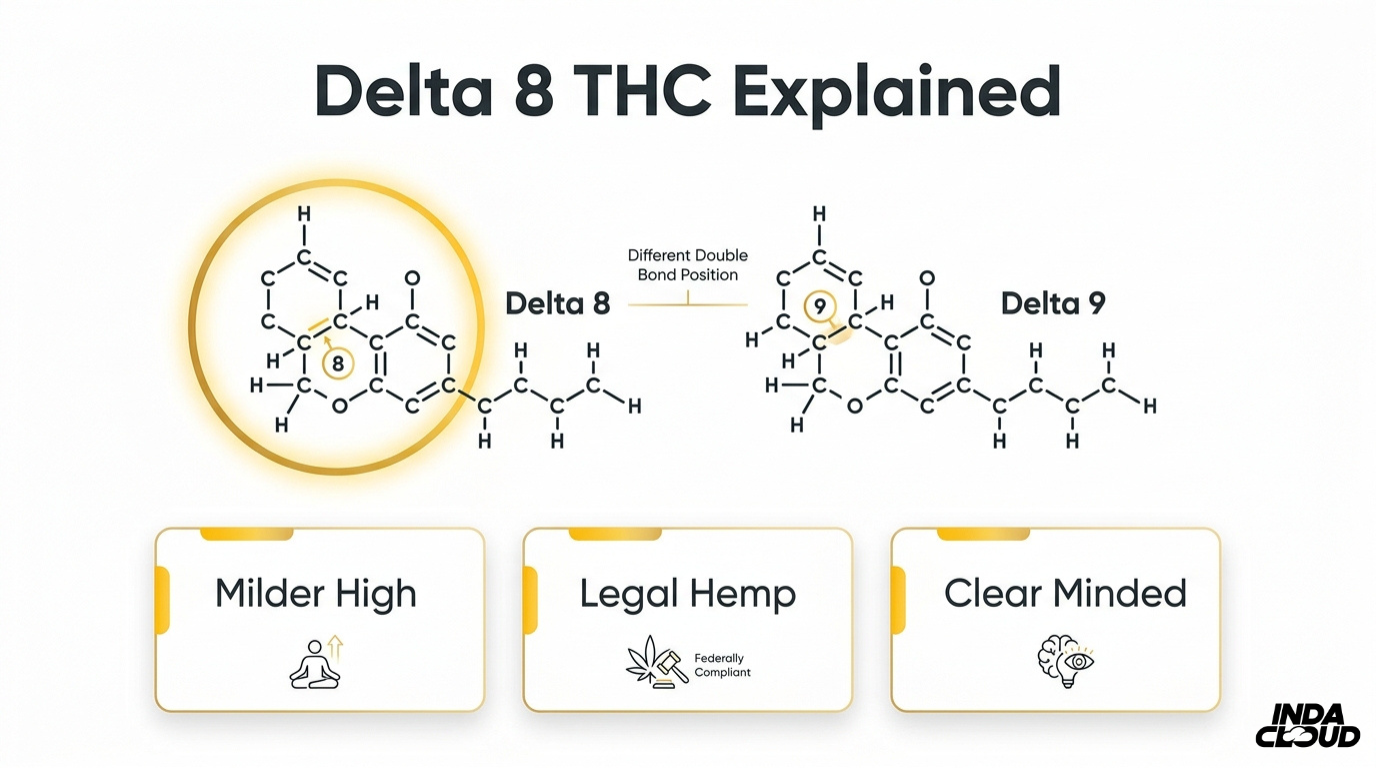
Delta 8 shares the same molecular formula as Delta 9 (C21H30O2) but places its double bond on the eighth carbon rather than the ninth. This structural difference, along with its partial agonist behavior at CB1 receptors, produces a clearer, more functional experience compared to Delta 9 while remaining distinctly psychoactive unlike CBD.
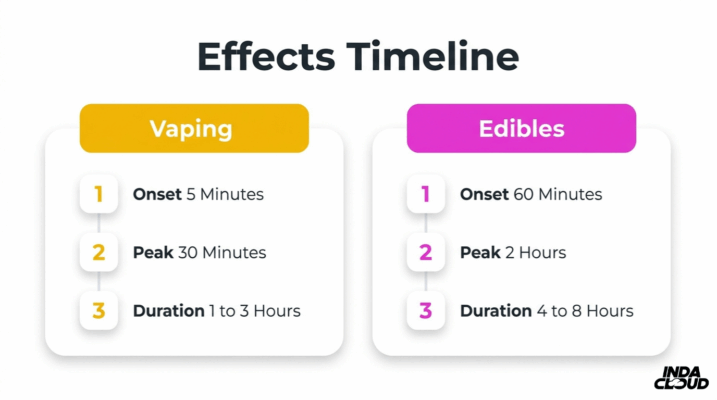
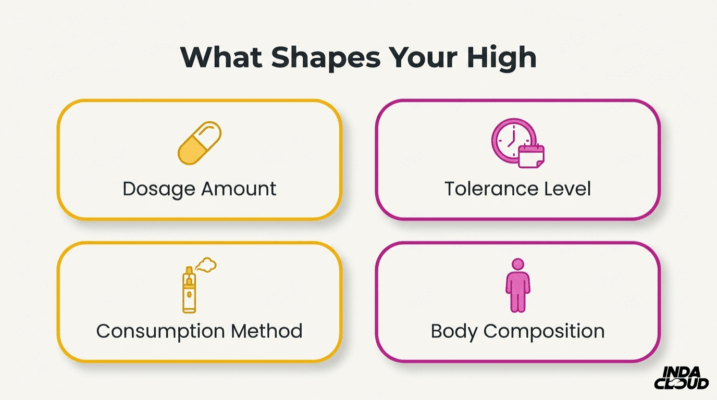
Effects typically include calm euphoria, gentle body relaxation, and preserved mental clarity. Duration ranges from 1 to 3 hours when inhaled to 4 to 8 hours with edibles, and metabolites can remain detectable for up to 30 days in heavy users. Dosage, tolerance, consumption method, and body composition all influence the outcome.
Side effects such as anxiety, dry mouth, and dizziness can occur, particularly at higher doses. The FDA has received reports of adverse events serious enough to require emergency medical intervention, making product quality and responsible dosing essential.
Federally, the 2018 Farm Bill permits hemp-derived cannabinoids below 0.3% Delta 9 THC, yet states like Alaska, Washington, and New York have enacted their own bans or restrictions. Verifying state laws and selecting brands with third-party lab testing are critical steps before purchasing.
What Is Delta 8 THC and How Does It Differ from Other Cannabinoids?
Delta 8 THC is a naturally occurring cannabinoid found in trace amounts in the cannabis plant, distinguished from other cannabinoids by its unique molecular structure and milder psychoactive profile. The sections below compare Delta 8 to Delta 9 THC, CBD, and THCa.
How Is Delta 8 THC Different from Delta 9 THC?
Delta 8 THC is different from Delta 9 THC primarily in molecular structure and psychoactive intensity. Both cannabinoids share the same molecular formula, C21H30O2, but Delta 8 places its double bond on the 8th carbon atom while Delta 9 places it on the 9th. This small structural shift produces noticeably different effects; Delta 8 delivers a milder, clearer high compared to the more intense psychoactive experience associated with Delta 9.
Production methods also differ significantly. According to a 2024 analysis published in Molecules (MDPI), Delta 8 THC is typically formed through the nonenzymatic isomerization of CBD using acid catalysts and heat, rather than being extracted directly from the plant. Delta 9, by contrast, occurs abundantly in marijuana cultivars. For anyone comparing the two, Delta 8 offers a gentler entry point while still producing genuine psychoactive effects.
How Does Delta 8 THC Compare to CBD?
Delta 8 THC compares to CBD most clearly in one key distinction: Delta 8 is psychoactive and CBD is not. Delta 8 binds to CB1 receptors in the central nervous system, producing a mild euphoric high. CBD, on the other hand, has negligible affinity for CB1 receptors and does not generate intoxication.
Their origins from hemp overlap, yet their effects serve different purposes:
- Delta 8 THC produces relaxation, mood elevation, and mild euphoria.
- CBD supports calm and physical comfort without altering mental state.
- Delta 8 will trigger a positive result on standard drug tests; CBD typically will not.
This makes the choice between them largely a question of whether the user wants psychoactive effects or prefers to remain clear-headed.
How Is Delta 8 THC Different from THCa?
Delta 8 THC is different from THCa in its chemical state and immediate effects. THCa is the raw, acidic precursor form of THC found in unprocessed cannabis flower. In this natural state, THCa is non-psychoactive because it cannot efficiently bind to CB1 receptors.
The critical difference emerges with heat. When THCa undergoes decarboxylation through smoking, vaping, or cooking, it converts into active THC and becomes psychoactive. Delta 8, however, is already in its activated form and produces psychoactive effects without requiring any conversion step. Both cannabinoids are available in hemp-derived products, but their behavior at the point of consumption is fundamentally different.
Understanding how Delta 8 compares to these cannabinoids clarifies how it interacts with your body.
How Does Delta 8 THC Get You High?
Delta 8 THC gets you high by binding to cannabinoid receptors in your brain and nervous system. The sections below explain its interaction with the endocannabinoid system, the specific role of CB1 receptor binding, and why its high feels milder than Delta 9.
How Does Delta 8 Interact with the Endocannabinoid System?
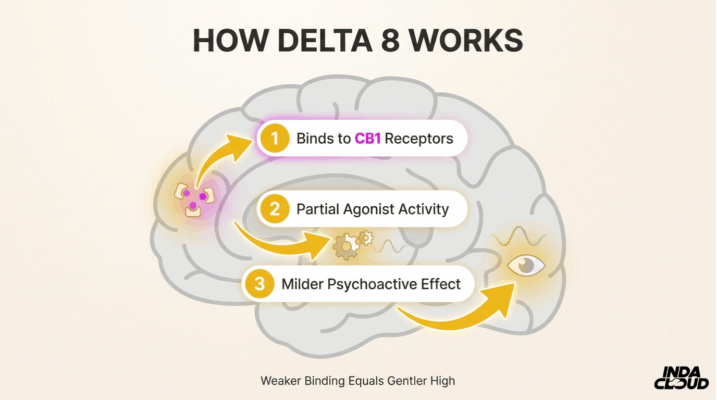
Delta 8 interacts with the endocannabinoid system by functioning as a partial agonist at both CB1 and CB2 receptors. Its psychoactive effects are primarily mediated through CB1 receptor activation in the central nervous system, according to a study published in the Journal of Cannabis Research. Unlike a full agonist, a partial agonist produces a submaximal response even at full receptor occupancy, which contributes to Delta 8’s more moderate psychoactive profile.
When consumed orally, Delta 8 is metabolized into 11-hydroxy-Delta-8-THC. This metabolite has been found to inhibit major hepatic cytochrome P450 enzymes, which means it can interfere with how your body processes other medications. Anyone taking prescription drugs should consult a healthcare provider before using Delta 8 products.
What Role Does CB1 Receptor Binding Play in the Delta 8 High?
CB1 receptor binding plays a central role in producing the Delta 8 high. CB1 receptors are concentrated in the brain and central nervous system, and their activation triggers the euphoria, relaxation, and altered perception associated with cannabinoid use. Radwan et al. (2015) reported that Delta 8 THC has a binding affinity (Ki) of 78 ± 5 nM at the CB1 receptor and 12 ± 1.2 nM at the CB2 receptor.
The lower CB1 affinity compared to CB2 is notable. Because CB1 drives psychoactive effects while CB2 primarily influences immune and peripheral functions, this binding profile helps explain why Delta 8 delivers a noticeable but controlled high. For most users, this receptor dynamic is precisely what makes Delta 8 an appealing middle ground between CBD and Delta 9.
Why Is the Delta 8 High Considered Milder Than Delta 9?
The Delta 8 high is considered milder than Delta 9 because of its weaker binding affinity at the CB1 receptor. Both cannabinoids share the same molecular formula, but the double bond sits on the eighth carbon in Delta 8 versus the ninth in Delta 9. This small structural shift reduces how strongly Delta 8 activates CB1 receptors, resulting in less intense euphoria and a lower likelihood of anxiety or paranoia.
Its partial agonist behavior further limits peak psychoactive intensity. Where Delta 9 can overwhelm newer users, Delta 8 tends to produce a clearer, more functional experience. This pharmacological distinction makes Delta 8 a practical choice for those who want mild psychoactive effects without the sharp cognitive disruption that higher-potency cannabinoids can cause.
Understanding how Delta 8 produces its high sets the stage for recognizing what that experience actually feels like.
What Does a Delta 8 High Feel Like?
A Delta 8 high feels like a milder, clearer version of a traditional THC experience. Users commonly report relaxation without heavy sedation, gentle mood elevation, and maintained mental clarity. The sections below cover mental effects, physical sensations, and impacts on focus and creativity.
What Are the Mental and Mood Effects of Delta 8?
The mental and mood effects of Delta 8 include calm euphoria, reduced anxiety, and a general sense of ease. Because Delta 8 THC acts as a partial agonist at CB1 receptors in the central nervous system, according to a 2021 study in the Journal of Cannabis Research, its psychoactive effects are present but notably softer than those of Delta 9.
Most users describe the mental experience as clear-headed rather than foggy. Feelings of contentment and gentle uplift tend to replace the racing thoughts or overthinking that stronger cannabinoids sometimes trigger. This makes Delta 8 a popular choice for evening wind-down or low-key social settings where mental composure still matters.
What Are the Physical Sensations of a Delta 8 High?
The physical sensations of a Delta 8 high typically include:
- Gentle body relaxation that eases muscle tension without couch-lock.
- A warm, soothing sensation that spreads gradually through the limbs.
- Mild appetite stimulation, often less intense than with Delta 9.
- Occasional dry mouth and slight heaviness in the eyelids.
These effects tend to feel smooth and manageable. The body high rarely overwhelms, which is partly why beginners often gravitate toward Delta 8 as an entry point. For those sensitive to physical side effects, starting with 5 to 15 milligrams helps gauge individual response before increasing the dose.
How Does Delta 8 Affect Focus and Creativity?
Delta 8 affects focus and creativity by promoting a relaxed yet alert mental state. Unlike Delta 9, which can scatter attention at higher doses, Delta 8’s milder CB1 receptor interaction tends to preserve cognitive function while loosening the mental grip of stress and distraction.
Many users find that low-to-moderate doses enhance creative thinking and sustained attention on tasks like writing, art, or brainstorming. Higher doses, however, may shift the experience toward sedation rather than productivity. The key is finding the right balance for your goals; what works for a creative session differs from what suits deep relaxation.
With a clear picture of how Delta 8 feels, understanding how long these effects last helps set realistic expectations.
How Long Do Delta 8 Effects Last?
Delta 8 effects last anywhere from 1 to 8 hours depending on the consumption method. Smoking and vaping produce shorter, faster-hitting highs, while edibles deliver longer-lasting effects with a delayed onset. Below, each method’s timeline is broken down alongside how long Delta 8 remains detectable in your system.

How Long Does the High Last When You Smoke or Vape Delta 8?
The high lasts approximately 1 to 3 hours when you smoke or vape Delta 8. Effects typically onset within minutes, peak around 30 to 45 minutes, and taper gradually. This rapid delivery method is popular among younger, urban consumers; according to the Brightfield Group, young city-dwellers are the primary demographic driving the Delta 8 trend, frequently purchasing products through smoke and vape stores or CBD specialty retailers.
Inhalation bypasses the digestive system, sending Delta 8 THC directly into the bloodstream through the lungs. Because of this fast absorption, the experience tends to be more intense initially but fades sooner than with oral methods. For those wanting quick, controlled sessions, vaping or smoking offers the most predictable duration window.
How Long Does the High Last When You Eat Delta 8 Edibles?
The high lasts approximately 4 to 8 hours when you eat Delta 8 edibles. Onset is slower compared to inhalation, generally taking 30 minutes to 2 hours before effects become noticeable. This delay occurs because Delta 8 must pass through the digestive tract and undergo first-pass metabolism in the liver before reaching the bloodstream.
During liver metabolism, Delta 8 THC converts into 11-hydroxy-Delta-8-THC, a metabolite that can produce a more sustained and body-forward experience. Factors such as stomach contents, individual metabolism, and dosage size all influence both onset timing and overall duration. For anyone new to edibles, this extended timeline makes patience essential; increasing the dose prematurely is one of the most common mistakes beginners make.
How Long Does Delta 8 Stay in Your System After Use?
Delta 8 stays in your system for up to 30 days after use in heavy consumers. Detection windows vary significantly by test type and usage frequency. According to GoodRx, heavy users of Delta 8 THC may test positive on drug tests for up to 30 days post-consumption due to the accumulation of metabolites in body fat.
Key detection windows by test type include:
- Urine tests detect Delta 8 metabolites for 3 to 30 days, depending on usage frequency.
- Blood tests identify metabolites within a 12 to 48 hour window after consumption.
- Saliva tests typically detect use within 1 to 3 days.
- Hair follicle tests can reveal exposure for up to 90 days.
Body fat percentage, hydration levels, and metabolic rate all influence how quickly your body clears these metabolites. Because standard drug panels cannot distinguish between Delta 8 and Delta 9 THC metabolites, even occasional use may trigger a positive result. Understanding these factors becomes especially important when specific influences on the Delta 8 experience are considered.
What Factors Influence How Delta 8 Affects You?
Several factors influence how Delta 8 affects you, including dosage, tolerance, consumption method, body weight, and metabolism. The sections below break down each variable.
How Does Dosage Change the Delta 8 Experience?
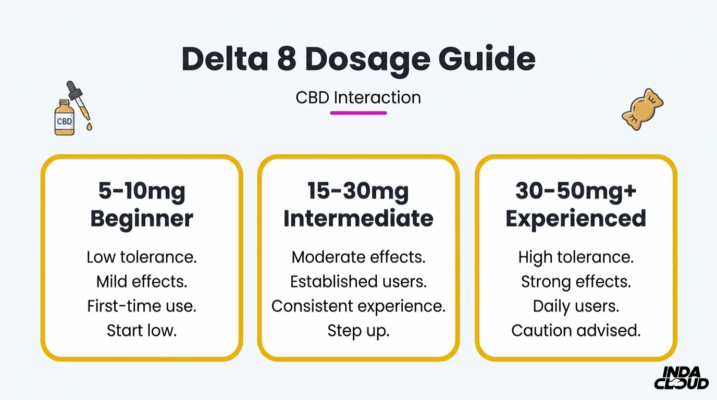
Dosage changes the Delta 8 experience by directly controlling the intensity and duration of effects. A low dose typically produces mild relaxation and subtle mood elevation, while higher amounts amplify both psychoactive and physical sensations. According to PharmaCBD’s industry guidelines, beginners should start with 5 to 15 milligrams of Delta 8 THC to assess individual tolerance before increasing the amount. Incremental adjustments of 5 milligrams per session help users find their ideal range without overcorrecting. Starting low is the single most effective way to avoid an uncomfortable first experience with any cannabinoid.
How Does Your Tolerance Level Affect the Delta 8 High?
Your tolerance level affects the Delta 8 high by determining how sensitive your CB1 receptors remain to cannabinoid activation. New users with no prior cannabis exposure typically feel stronger effects at lower doses. Frequent consumption gradually desensitizes these receptors, requiring larger amounts to achieve the same results. Key tolerance factors include:
- Frequency of use: Daily users build tolerance faster than occasional consumers.
- Cross-tolerance: Regular Delta 9 THC users often notice reduced Delta 8 sensitivity from the start.
- Tolerance breaks: Abstaining for several days can partially restore receptor sensitivity.
Tracking your own response pattern over time matters more than following someone else’s dosage chart.
How Does the Consumption Method Alter Delta 8 Effects?
The consumption method alters Delta 8 effects by changing how quickly the cannabinoid enters the bloodstream and how long it stays active. Inhalation through vaping or smoking delivers Delta 8 to the lungs, where it absorbs into the blood within minutes and typically peaks in 15 to 30 minutes. Edibles, by contrast, must pass through the digestive system and liver, where Delta 8 converts into 11-hydroxy-Delta-8-THC before reaching the brain. This oral metabolic pathway delays onset to 60 to 90 minutes but often produces longer-lasting, more pronounced effects. Sublingual tinctures fall between these two, absorbing through oral tissue for moderate onset speed.
How Do Body Weight and Metabolism Influence Delta 8?
Body weight and metabolism influence Delta 8 by affecting how the cannabinoid distributes, processes, and clears from your body. Delta 8 THC is lipophilic, meaning it binds to fat tissue. Individuals with higher body fat percentages may experience a slower onset, a more gradual peak, and longer-lasting residual effects as the compound releases from fat stores over time. Faster metabolic rates accelerate enzymatic breakdown in the liver, shortening the duration of effects. Neither variable alone dictates your experience; the interplay between body composition, metabolic speed, and dosage collectively shapes outcomes.
Understanding these personal variables helps you calibrate your Delta 8 routine for consistent, predictable results.
What Are the Potential Side Effects of Delta 8 THC?
The potential side effects of Delta 8 THC include both physical and psychiatric symptoms that range from mild discomfort to reactions serious enough to require medical attention. Between December 2020 and February 2022, the FDA received 104 reports of adverse events involving Delta 8 THC, with 55% of those cases requiring hospital admission or emergency medical intervention, according to the U.S. Food and Drug Administration.
Commonly reported physical side effects include:
- Dry mouth and red eyes
- Dizziness and lightheadedness
- Drowsiness or sedation
- Changes in heart rate
- Nausea, particularly with edibles consumed in higher doses
Psychiatric effects also appear frequently among users. A study published in the Journal of Cannabis Research analyzing self-reported adverse events found that anxiety (16.4%) and paranoia (9.3%) were the most commonly cited psychiatric concerns. These reactions tend to be more pronounced at higher doses or among individuals with lower tolerance.
Most side effects are temporary and dose-dependent, which is why starting low and increasing gradually matters. For many users, keeping intake within a comfortable range eliminates the majority of unwanted reactions. Still, anyone experiencing persistent or severe symptoms should seek medical guidance rather than simply adjusting their dose on their own.
Is Delta 8 THC Legal in the United States?
Delta 8 THC occupies a gray area in United States federal law. Its legality depends on how hemp derivatives are classified at the federal level and how individual states choose to regulate them. The sections below cover the 2018 Farm Bill’s language, state-level bans, and the federal-state conflict.
What Does the 2018 Farm Bill Say About Delta 8 THC?
The 2018 Farm Bill (Agriculture Improvement Act of 2018) defines hemp as “the plant Cannabis sativa L. and any part of that plant, including the seeds thereof and all derivatives, extracts, cannabinoids, isomers, acids, salts, and salts of isomers, whether growing or not, with a delta-9 tetrahydrocannabinol concentration of not more than 0.3 percent on a dry weight basis.” Because Delta 8 THC is a cannabinoid isomer distinct from Delta 9 THC, products containing it can fall under this hemp definition when they meet the 0.3% Delta 9 threshold. This language removed hemp-derived cannabinoids from the Controlled Substances Act, which is precisely why Delta 8 products entered the mainstream market so rapidly. However, the bill never explicitly names Delta 8, leaving room for regulatory disputes.
Which States Have Banned or Restricted Delta 8 THC?
Several states have banned or restricted Delta 8 THC despite its federal hemp classification. According to a state-by-state legal guide published by ACS Laboratory, Alaska’s Schedule IIIA (Sec. 11.71.160.(f)) classifies all tetrahydrocannabinol isomers, including Delta 8, as controlled substances, effectively banning their manufacture, possession, and sale. Washington state takes a similar approach, classifying Delta 8 as a Schedule I controlled substance under its Uniform Controlled Substances Act. Other states have targeted the production process itself; New York, for example, amended its health regulations to prohibit hemp manufacturers from using Delta 8 created through isomerization. Consumers should always verify their own state’s current laws before purchasing.
How Does Federal and State Law Conflict on Delta 8?
Federal and state law conflict on Delta 8 because the Farm Bill’s broad hemp definition clashes with both state-level bans and the DEA’s interpretation of synthetic cannabinoids. The DEA’s 2020 Interim Final Rule stated that “all synthetically derived tetrahydrocannabinols remain Schedule I controlled substances,” creating a legal debate over whether Delta 8 converted from CBD through acid-catalyzed isomerization qualifies as “synthetic.” States like Alaska and Washington have resolved this ambiguity by banning all THC isomers outright, while others permit sales under the Farm Bill framework. This patchwork means a product legally sold in one state may be a controlled substance in another. For consumers navigating this landscape, checking both federal and state regulations before buying is essential.
How Do You Choose Safe and Legal Delta 8 Products?
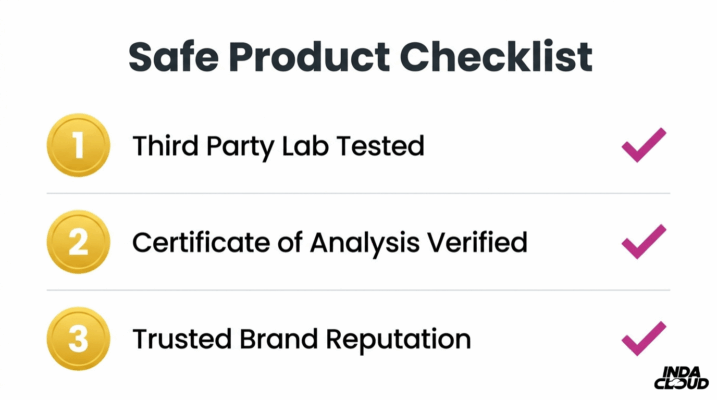
You choose safe and legal Delta 8 products by verifying third-party lab results, reading Certificates of Analysis, and selecting brands with transparent manufacturing practices. The following sections cover lab testing, COA interpretation, and brand trust signals.
Why Does Third-Party Lab Testing Matter for Delta 8?
Third-party lab testing matters for Delta 8 because it provides independent verification that a product contains what the label claims, free from harmful contaminants. Unlike in-house testing, independent laboratories have no financial incentive to alter results, which makes their findings more reliable for consumers.
This layer of accountability is especially critical in the Delta 8 market. Between December 2020 and February 2022, the FDA received 104 reports of adverse events involving Delta 8 THC, with 55% requiring hospital admission or emergency medical intervention, according to the U.S. Food and Drug Administration. Many of these cases involved products with inaccurate labeling or undisclosed substances.
Independent labs screen for residual solvents, heavy metals, pesticides, and accurate cannabinoid potency. Without this verification, consumers have no way to confirm product safety.
What Should You Look for on a Delta 8 Certificate of Analysis?
You should look for cannabinoid potency levels, contaminant screening results, and batch-specific identification on a Delta 8 Certificate of Analysis. A valid COA is the single most important document for confirming product quality before purchase.
Key elements to verify on any COA include:
- Cannabinoid profile confirming Delta 8 THC concentration matches the label and Delta 9 THC remains at or below 0.3%.
- Contaminant panels covering pesticides, heavy metals, residual solvents, and microbial impurities.
- Batch number that matches the product packaging, proving the test applies to your specific purchase.
- Laboratory name and accreditation, confirming the testing facility is ISO 17025 certified or state-licensed.
- Date of analysis to ensure results are recent and relevant to current inventory.
If any of these elements are missing or the batch number does not match, treat it as a red flag.
How Can You Identify Trustworthy Delta 8 Brands?
You can identify trustworthy Delta 8 brands by evaluating their transparency, sourcing practices, and commitment to regulatory compliance. Reliable brands publish current COAs for every product batch, use U.S.-grown hemp, and clearly disclose their extraction and manufacturing methods.
Several trust indicators separate reputable companies from questionable ones:
- Publicly accessible lab reports linked directly to each product page.
- Clear ingredient lists with no proprietary blends hiding cannabinoid content.
- Compliant labeling that includes accurate Delta 9 THC percentages below the 0.3% federal threshold.
- Responsive customer support that can answer questions about sourcing and testing.
- Verified customer reviews demonstrating consistent product experiences over time.
Brands that obscure their testing data or lack verifiable sourcing information should be avoided entirely. For most consumers, spending a few extra minutes reviewing a brand’s documentation is the most effective way to reduce risk.
With product safety confirmed, the next step is exploring specific Delta 8 options that meet these standards.
How Can You Explore Delta 8 Through Hemp-Derived Products?
You can explore Delta 8 through hemp-derived products by choosing lab-tested edibles, vapes, and other formats from compliant brands. The sections below cover Inda Cloud’s product offerings and the essential takeaways on Delta 8 effects and legality.
Does IndaCloud Offer Lab-Tested Delta 8 Edibles and Vapes?
Yes, IndaCloud offers lab-tested Delta 8 edibles and vapes across a diverse product lineup. Every IndaCloud product undergoes comprehensive third-party testing to verify potency, purity, and federal compliance below the 0.3% Delta 9 THC threshold.
IndaCloud’s Delta 8 product categories include:
- Edibles: Gummies in multiple flavors and potencies, along with specialty treats like cookie bites and popping crystals.
- Vapes: Delta 8 cartridges and disposable pens available in strain-specific options.
- Flower and pre-rolls: Hemp-derived options in Indica, Sativa, and Hybrid varieties.
Backed by a team of over 35 cannabis experts and trusted by more than 250,000 verified customers, IndaCloud ships directly to consumers across the continental United States. For anyone prioritizing transparency, detailed lab reports are accessible on each product page at indacloud.co.
What Are the Key Takeaways About Delta 8 Effects and Legal Status?
The key takeaways about Delta 8 effects and legal status center on its milder psychoactive profile and its complex, state-dependent legality.
Delta 8 produces a gentler high than Delta 9 because it binds less strongly to CB1 receptors in the central nervous system. Users commonly report relaxation, mild euphoria, and manageable physical sensations. However, side effects such as anxiety and dry mouth can occur, especially at higher doses.
Legally, the 2018 Farm Bill permits hemp-derived cannabinoids containing less than 0.3% Delta 9 THC, yet individual states set their own restrictions. According to ACS Laboratory’s state-by-state analysis, New York amended its health regulations to prohibit Delta 8 created through isomerization in cannabinoid hemp products. Several other states, including Alaska and Washington, classify Delta 8 as a controlled substance entirely.
Before purchasing, always verify your state’s current laws and choose brands that provide third-party lab results. Inda Cloud can help simplify that process with transparent testing and federally compliant Delta 8 products shipped directly to your door.
 FREE SHIPPING $89+
 FREE GIFTS ALL ORDERS $120+
 100% FEDERALLY LEGAL
  LAB TESTED FOR PURITY